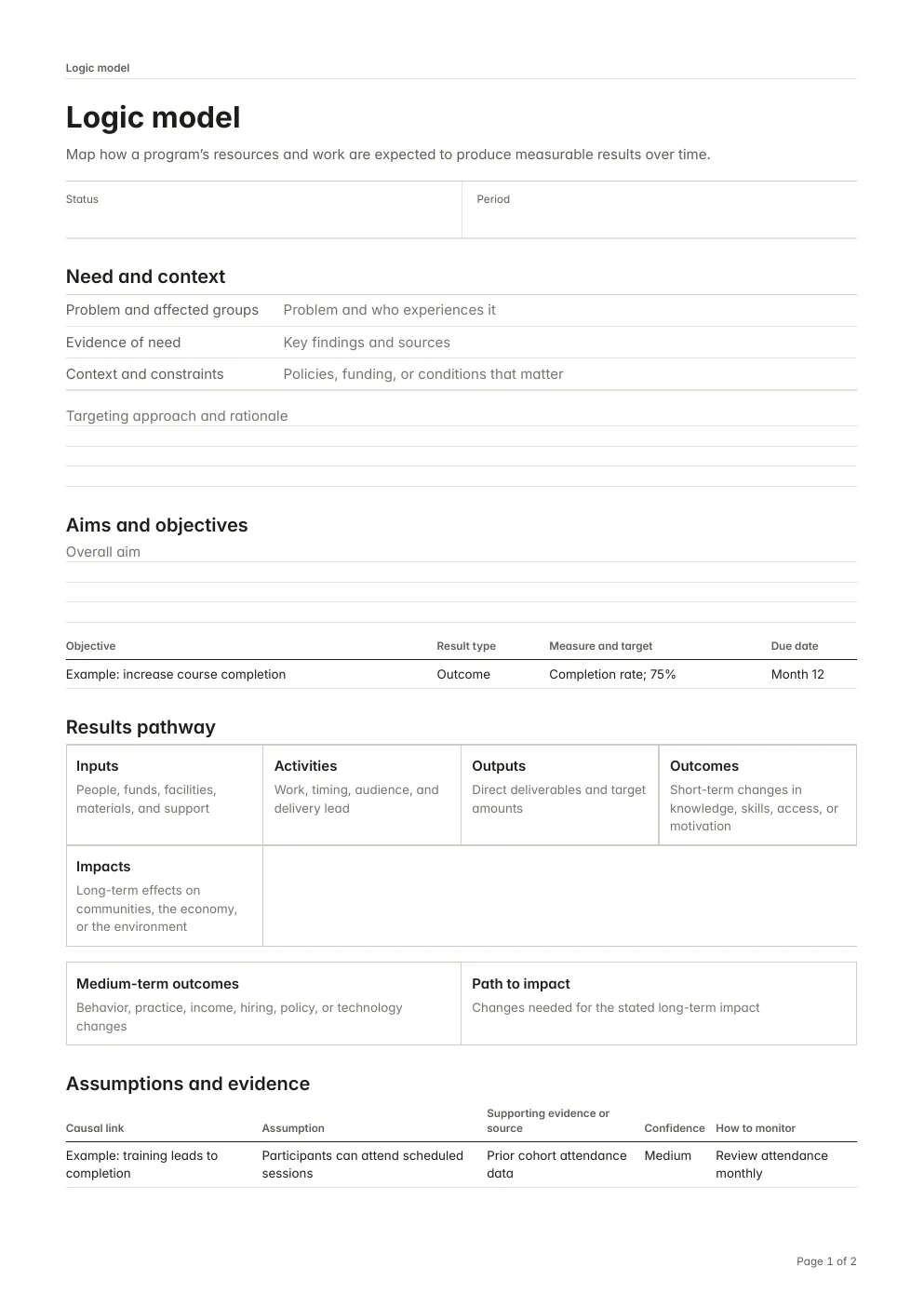
Map how a program’s resources and work are expected to produce measurable results over time. Use when designing an intervention or aligning its delivery and evaluation around a clear chain of results.
Need and contextDescribe the problem, who is affected, and the evidence that shows why action is needed.
Aims and objectivesState the intended change and a small set of specific, measurable objectives with realistic targets and deadlines.
Results pathwayFill in each box to show how resources and work lead to direct products, near-term changes, later changes, and lasting impact.
Assumptions and evidenceFor each link in the results pathway, record why one result should lead to the next and what evidence supports that belief.
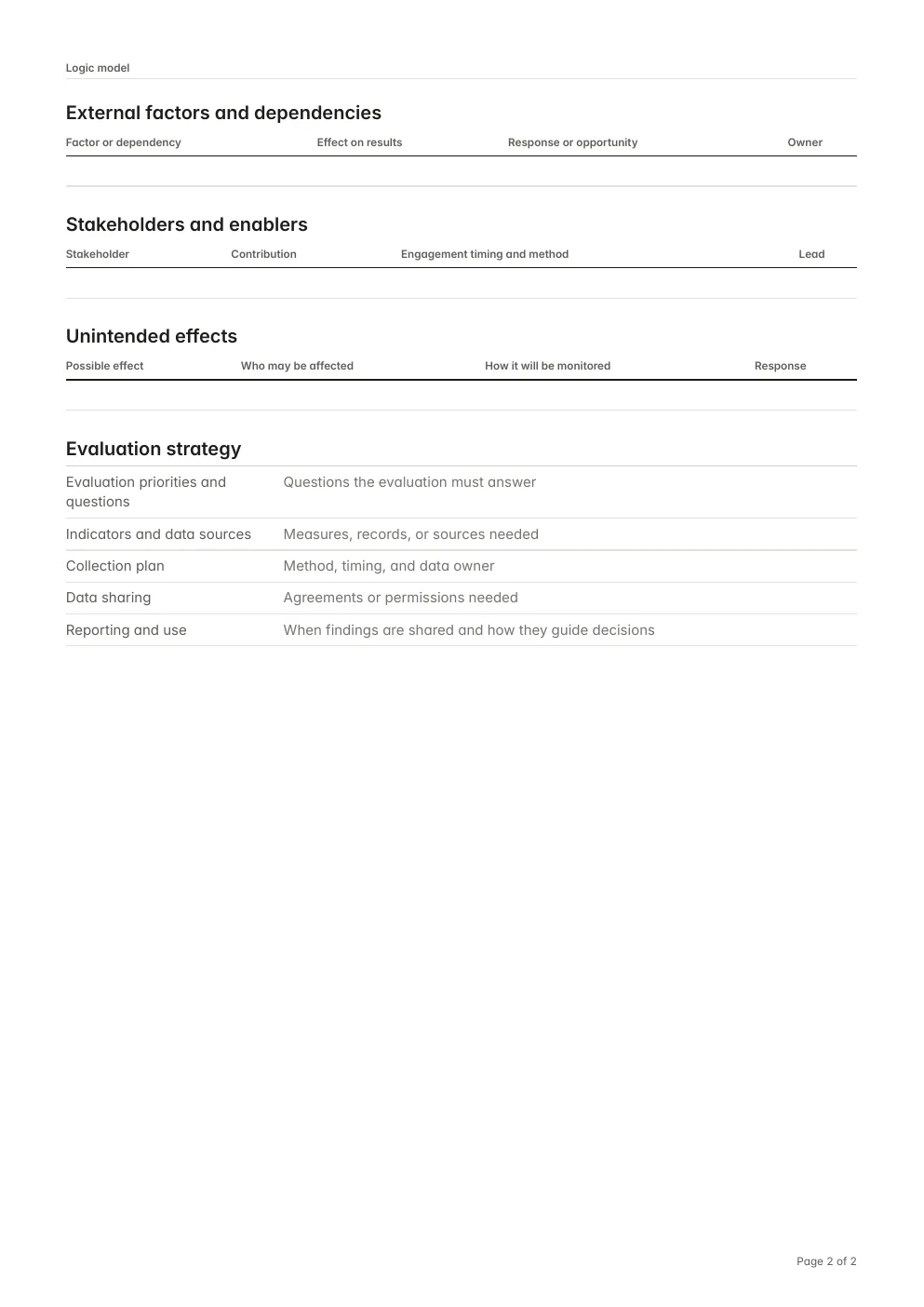
External factors and dependenciesIdentify conditions outside the program that could help or hinder results.
Stakeholders and enablersList the people and organizations needed to design, deliver, or evaluate the work.
Unintended effectsConsider positive and negative changes that could occur beyond the planned results.
Evaluation strategySet the evaluation priorities and questions, then identify the measures, data collection approach, owners, and reporting schedule.